Boca Raton Garage Door Guide
What That Garage Door Noise Is Actually Telling You
Boca Raton homes built between 1968 and 2005 develop specific door noises as original hardware ages. Here's what each sound tells you and what it costs to fix.
- Licensed & Insured
- Same-Area Service Calls
- Upfront Pricing
What Is Going On
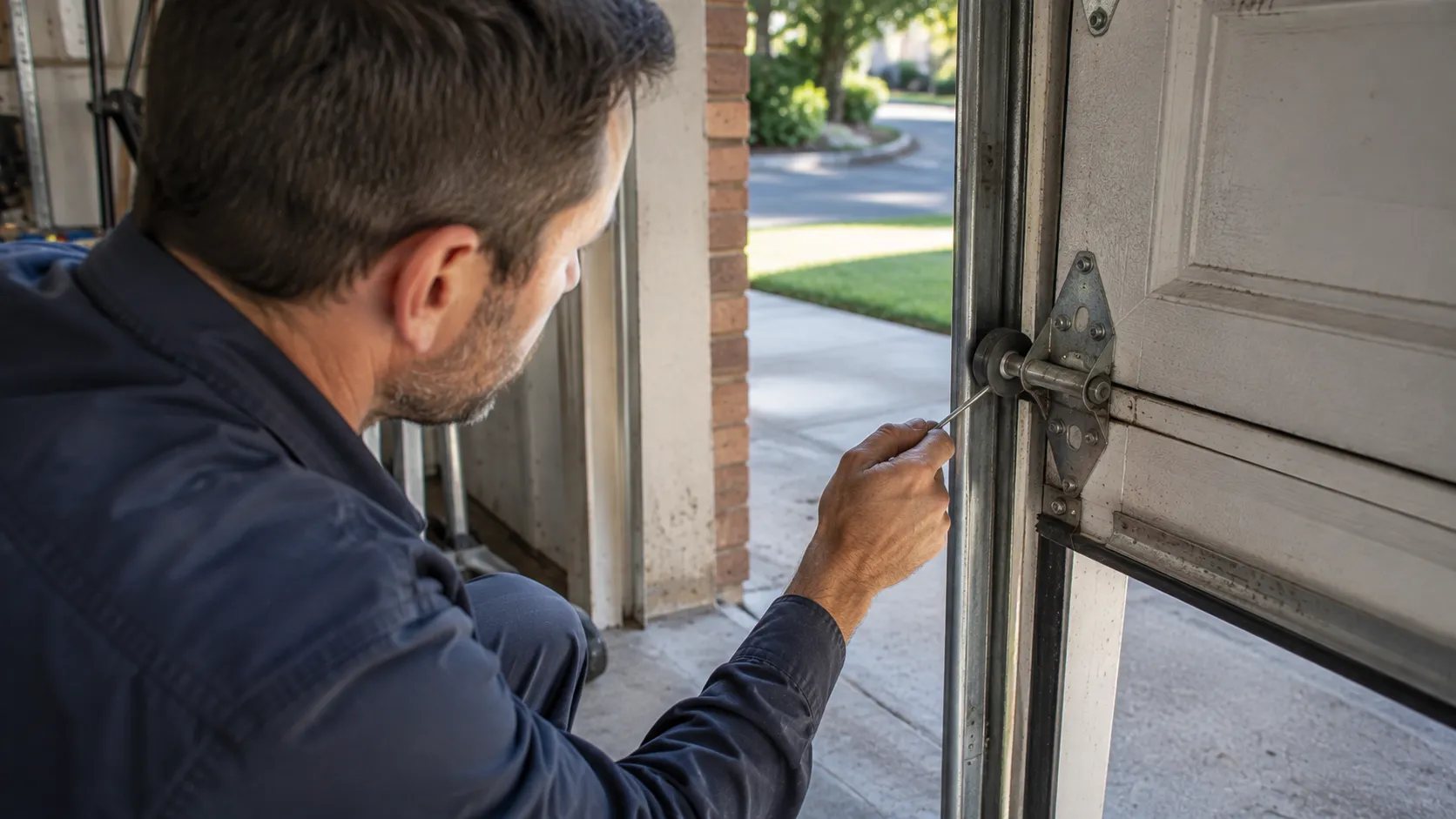
Most garage doors in Boca Raton went up between 1968 and 2005, with the bulk of that stock landing around 1976. That means a lot of doors on their second or third opener but still running original track brackets, or original springs that nobody's touched since Carter was president. A noise is the hardware telling you where the wear is concentrated, not a random annoyance.
A loud bang followed by the door refusing to lift is almost always a torsion spring letting go - on a door this age, that spring has done tens of thousands of cycles and it was only rated for so many. A rhythmic thump as the door travels usually means a bent track section or a roller that's worn past its bearing.
A grinding whine at the opener head points to a worn gear inside the unit itself, not the door. These aren't interchangeable diagnoses, and guessing wrong means paying for a part that wasn't the problem.
One honest limitation: noise alone doesn't always tell you if it's the spring, the cable, or the drum. On a house with 1970s-era hardware we often have to pull the door partway and look before naming the part, and that's a service call, not a phone diagnosis.
What to Look At First
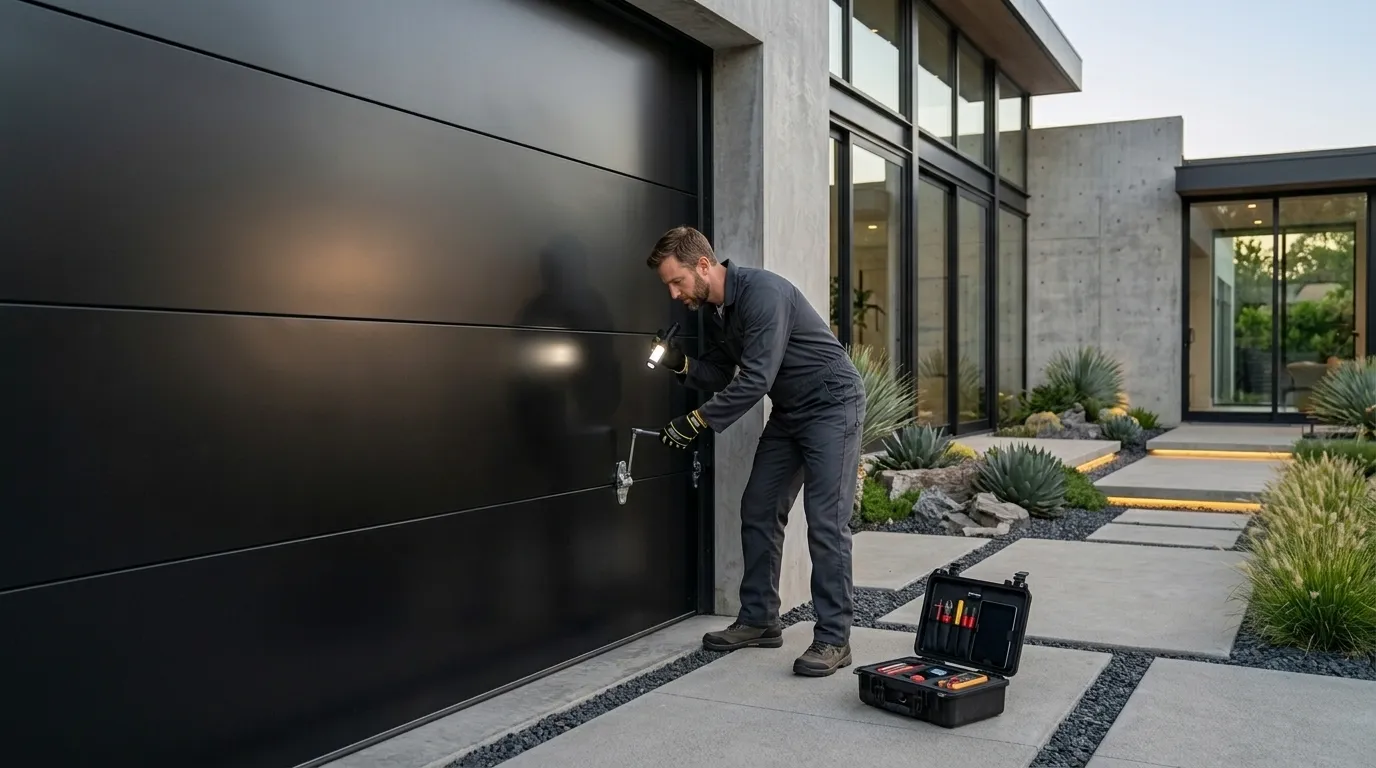
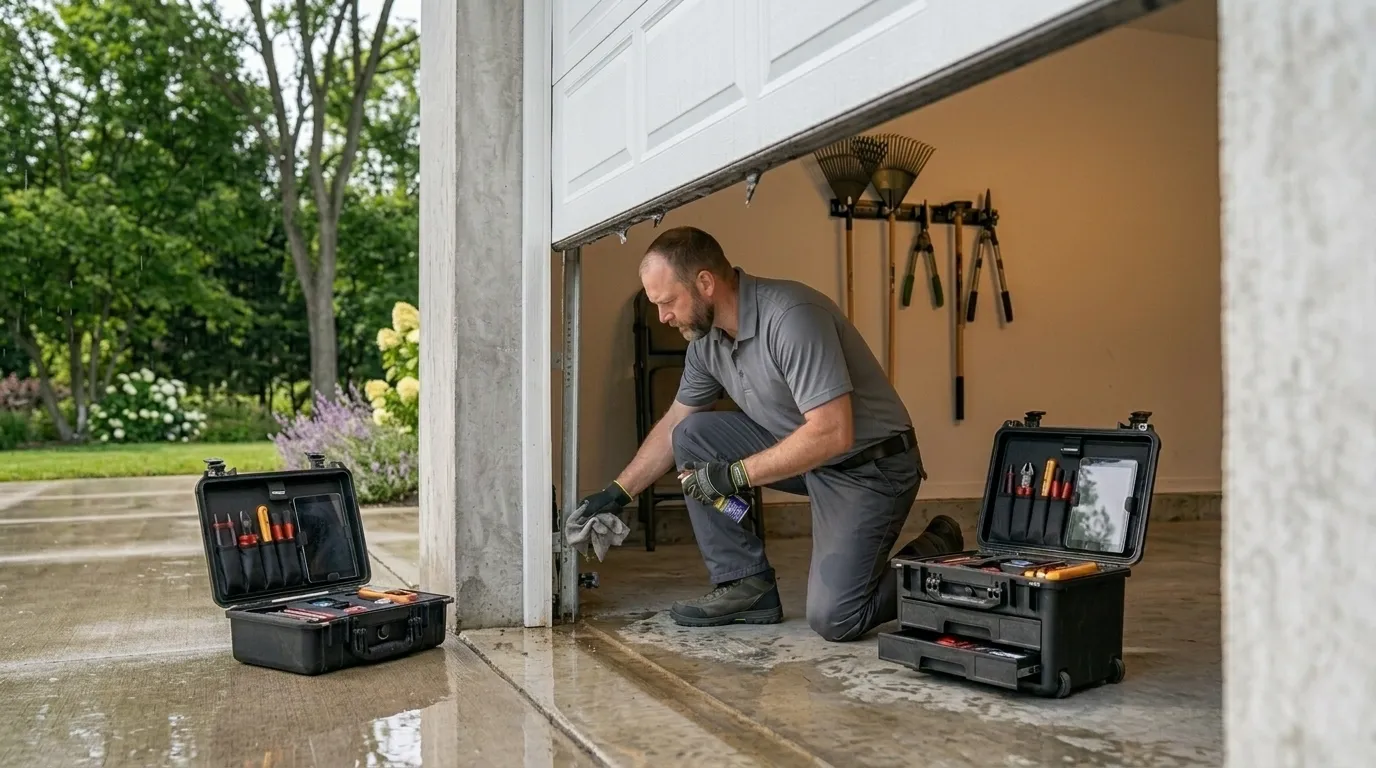
Before you call anyone, watch the door run one full cycle with the light on. Squealing that happens the whole way up and down, evenly, is almost always a roller or hinge that needs lubrication - cheap, five minutes, doesn't need a truck. Squealing that happens at one specific point in the travel, same spot every time, means something is bent or misaligned at that point on the track, and that's not a grease problem.
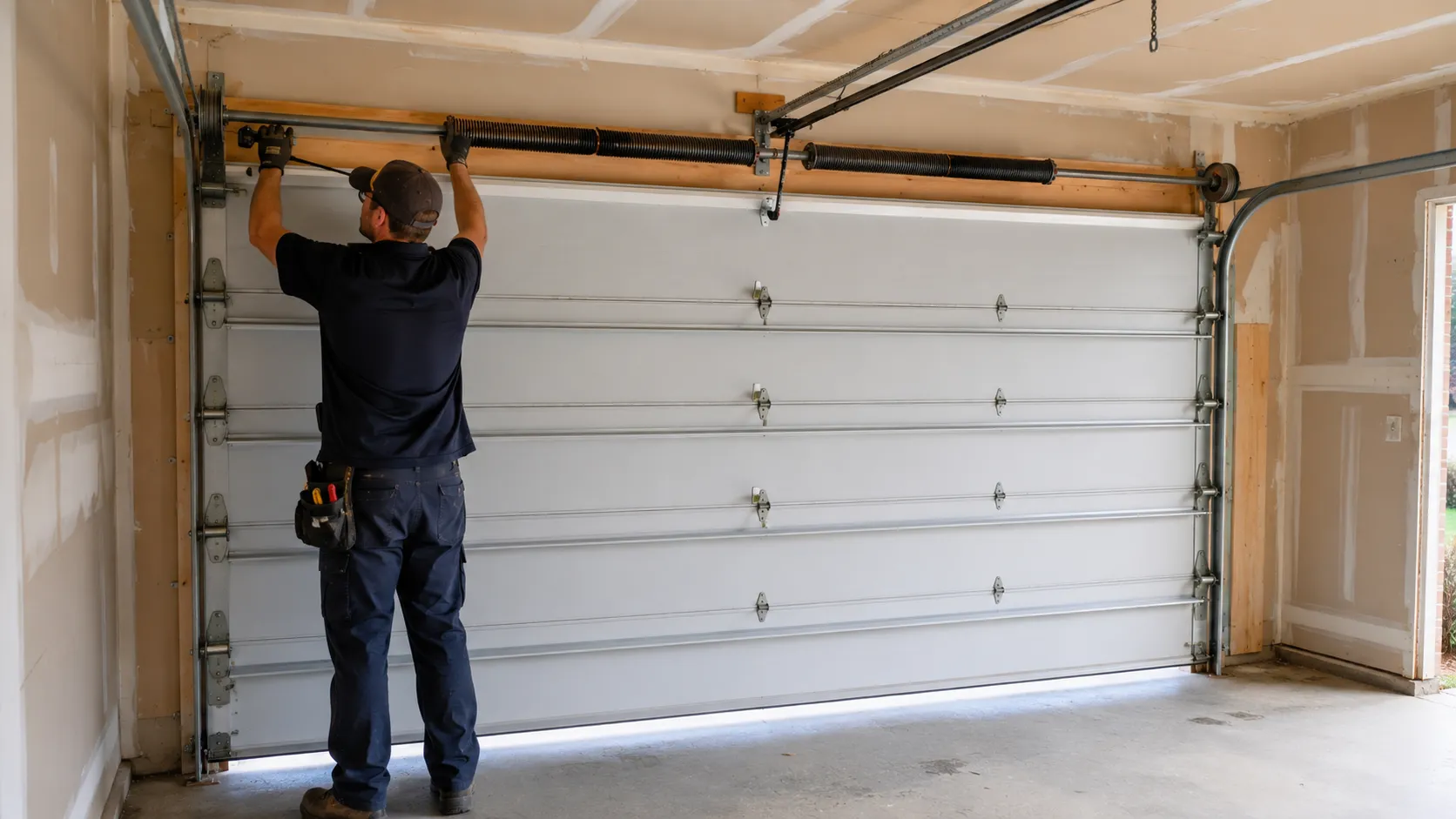
Check the springs next, but only by looking, never by hand - on a door from the 1970s-2000s stock common across this area, a spring under tension that's about to fail can do real damage. Look at the coils: rust, visible gaps between coils, or a spring that looks stretched compared to its twin on the other side are all signs it's near the end.
Listen for a distinct click-click-click before the door even starts moving. That's usually the opener's gear or the safety sensor relay, not the door hardware at all, which matters because it changes who and what gets replaced. If the noise only shows up in humid stretches and goes quiet otherwise, that's worth mentioning when you call - it narrows things down before anyone shows up.
How Local Conditions Play In
Boca Raton sits in a mild temperate band - no hard freezes, no deep cold to shrink metal and change how a spring behaves seasonally the way it would further north. That's the good news: you're not dealing with cold-snap spring failures or ice-jammed tracks.
What you are dealing with is humidity and salt air working steadily on metal, year-round, with no winter dry spell to slow it down. On houses from the 1968-2005 build years, original steel hardware - hinges, roller shafts, track bolts - has had four or five decades of that exposure with no seasonal break.
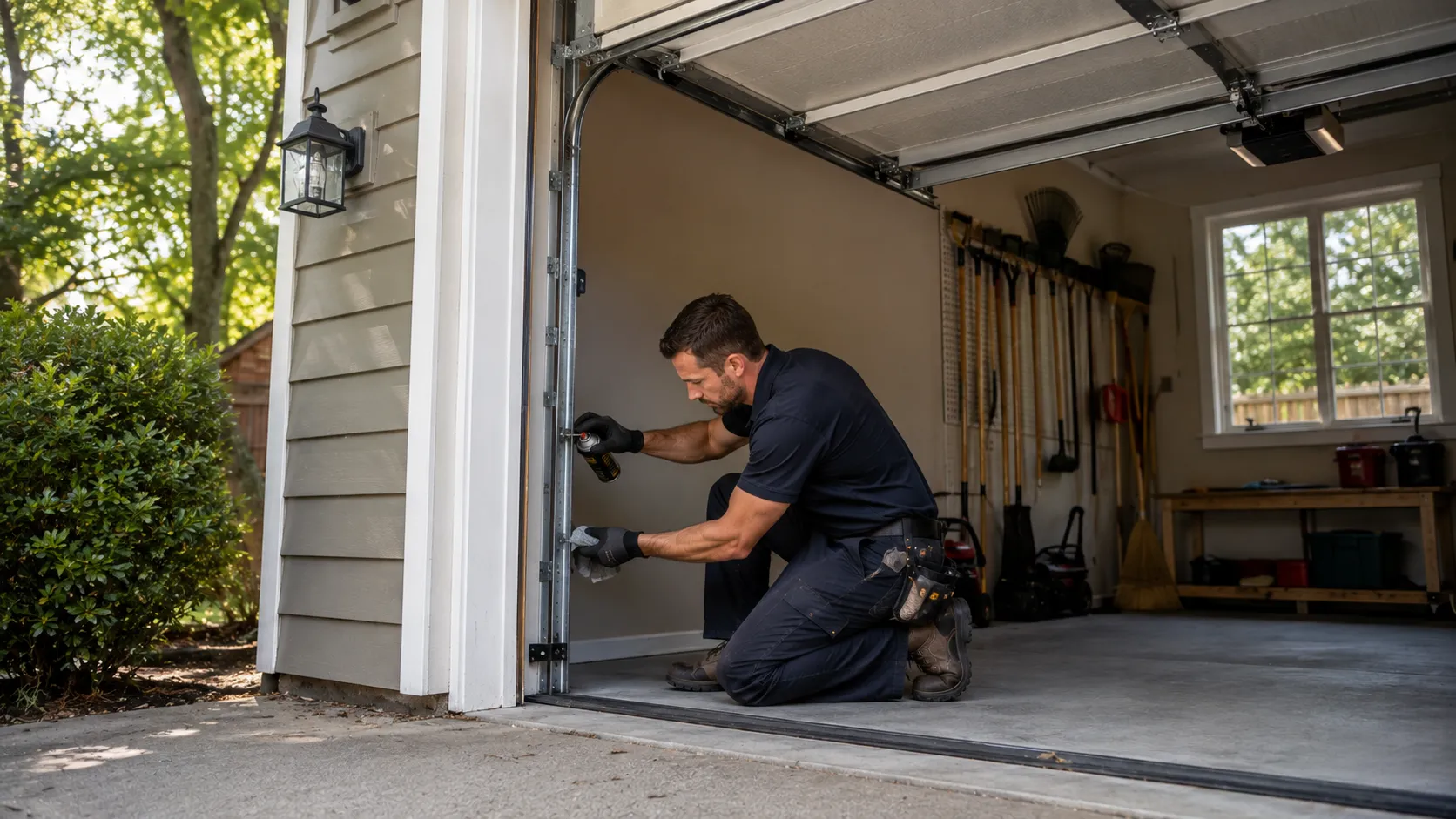
That shows up as a specific kind of noise: a dry, gritty scrape rather than a sharp squeal, which is corrosion on the roller shaft rather than a lack of lubrication. Oiling it will quiet it for a week and then it comes back, because the metal underneath is pitted, not dry.
This is also why we see more track and hinge replacement here than pure lubrication fixes on older homes - the constant humidity outpaces what grease alone can hold off. If your door lives in a garage that doesn't get much airflow, that acceleration is worse.
What It Costs
I don't have a flat number I can put here without knowing what's actually wrong - a bent roller bracket and a broken torsion spring are both common in this housing stock but priced worlds apart, and quoting one figure for both would be a guess dressed up as a fact. What I can tell you is how the visit works: we look at the door, name the part, and give you the number before anything gets touched.
Given that a lot of Boca Roca-era and later homes in this area are running original 1970s-2000s hardware, the honest pattern is that once one component fails, others from the same install batch aren't far behind - a spring failure at 45 years often means the opposite spring and the rollers are close too. Worth asking about when you call, rather than paying for a second visit in six months.
One limitation worth saying plainly: if the door itself is warped or the panels are rusted through, we'll tell you replacement makes more sense than repair, even if repair is what you called about. Patching a door that's structurally done doesn't save you money, it just delays the same call.
How We Can Help
Garage Door Repair
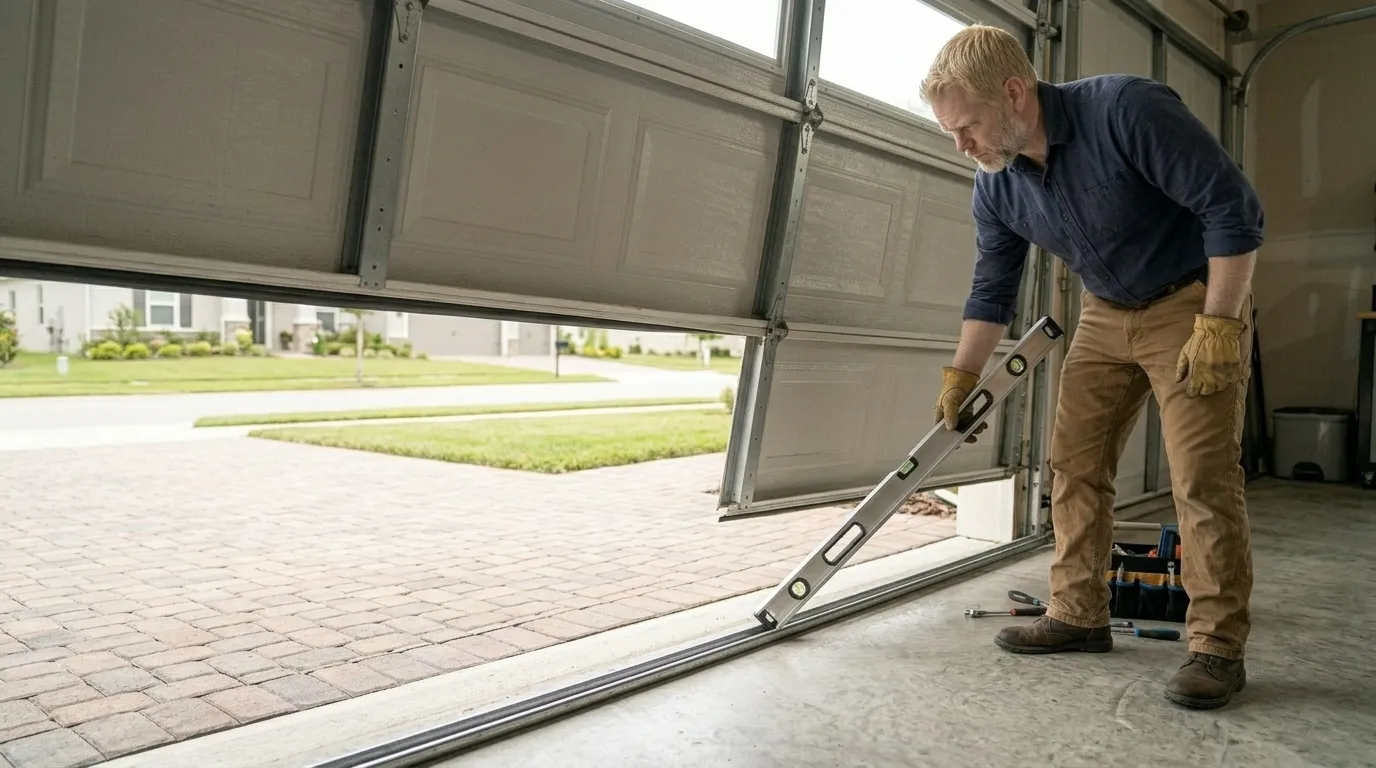
Springs, cables, tracks, rollers, and openers fixed by a tech who explains the problem before touching anything.
Learn more →
Garage Door Installation
New sectional doors sized and installed for the housing stock actually built in this area.
Learn more →
Garage Door Service
Tune-ups, lubrication, and safety checks that catch a small problem before it becomes a service call.
Learn more →Frequently Asked Questions
Why does my garage door bang loudly once and then won't open?
That's almost always a torsion spring breaking. On houses built in the 1968-2005 range common in this area, original or long-serving springs finally give out after decades of cycles. Don't try to force the door open by hand or with the opener - the other spring is likely near the end too, and the door can drop unexpectedly.
Is the grinding noise from my opener or the door itself?
If the grinding happens at the opener head and the door barely moves, it's usually a worn gear inside the unit. If the grinding travels with the door along the track, it's the hardware - rollers or a bent rail. Watching where the sound is loudest during one full cycle usually tells you which.
Why does my door only make noise on humid days?
Boca Raton's mild, humid climate works on exposed steel hardware year-round with no dry winter break. Rollers and track bolts on older homes corrode gradually, and that shows up as noise that gets worse when moisture is heaviest, even if the part hasn't failed yet.
Have a Door That Needs a Second Opinion?
Call and describe what it is doing - we will tell you what it likely is.